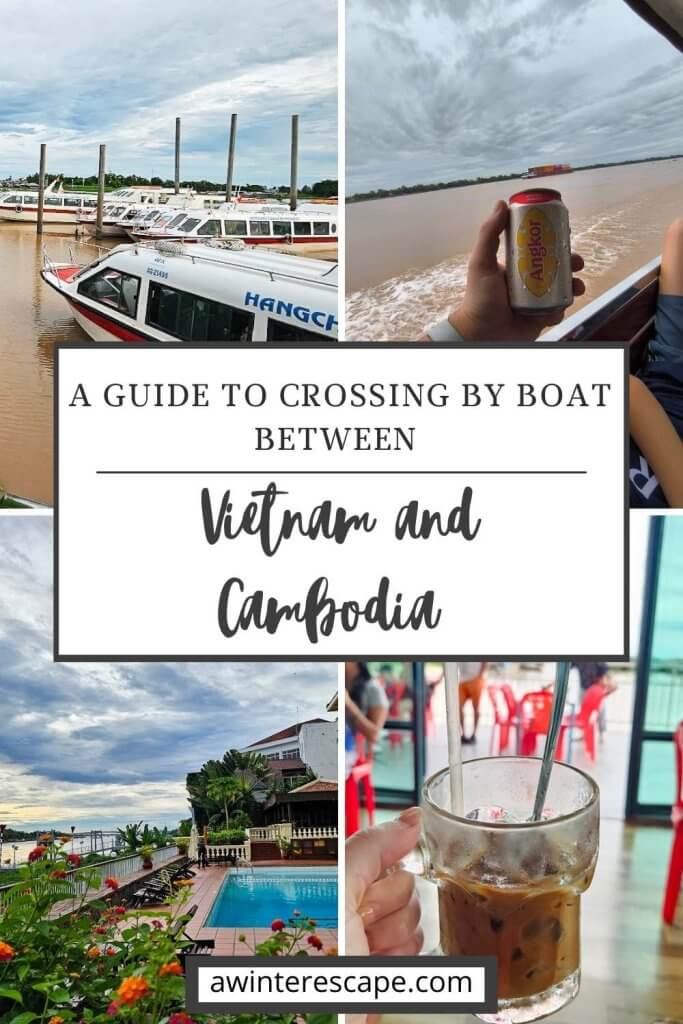
How to get from Vietnam to Cambodia by boat

Back in 2014, I had the chance to cross the border between Vietnam and Cambodia by boat, travelling from Chau Doc along the Mekong River to Phnom Penh. On our recent family holiday to Vietnam and Cambodia, I wanted to give my family this same fantastic experience.
But when I went to book it, I actually found it a bit tricky! In 2014 I worked for a tour company, and our ground operations staff in Southeast Asia handled everything for us. Ten years later, I was doing it myself and things had changed a lot (or so it seemed).
I didn’t give up though, and we were rewarded with a fantastic travel day! And now that we’ve done it, we can write this post so you know step-by-step how to take the same journey from Chau Doc to Phnom Penh (or vice versa). Because trust me, it’s worth it!
We did this route from Vietnam to Cambodia, but if you’re travelling from Cambodia to Vietnam, it works the same in reverse.
Note: This post contains affiliate links. If you click through and make a booking, we earn a small commission at no cost to you. This commission helps keep A Winter Escape running.
Why cross the border by Boat
There are a few reasons why I highly recommend crossing the land/river border between Vietnam and Cambodia.
The first reason is of course the adventure! Adding different methods of transport is such a great way to experience life in a different country and add to family memories. Our flights to and from Vietnam with Singapore Airlines were fantastic, as was our internal flight between Da Nang (Hoi An) and Ho Chi Minh City with Vietnam Airlines, but it was this Mekong fast ferry and our overnight sleeper train from Hanoi to Hue that really made us feel adventurous.
The second reason is that crossing the land border allows for easier exploration of the Mekong Delta region. You can do day tours to the Mekong Delta from Ho Chi Minh City (and I highly recommend this if you don’t have time to stay in the Delta) but the Mekong Delta itself is full of amazing experiences for the whole family. It’s a completely different way of life from other parts of Vietnam or Cambodia.
The third reason is the price. It’s a bit hard to compare flying from Ho Chi Minh City to taking a boat from Chau Doc, but if you want to experience the Delta anyway, it’s only about $80AUD/$55USD to take the ferry, whereas a flight with a reliable airline will be more expensive.
There are other ways to get from Vietnam to Cambodia overland, such as a bus; however the fast ferry is the quickest way.
How do I buy tickets?
We went with the Hang Chau Tourist Ferry, which we booked through 12Go. We have booked many trains and ferries through 12Go – the process is easy and legitimate.
Booking through 12Go allows you to book in English and get instant confirmation for your ferry tickets. It also means you can access support in English at any point should you need it.
Our tickets cost about $80AUD per person, which we paid with our credit card when booking the tickets.
You can book in person as well, but at certain times of the year seats may be booked out. We were travelling in a busy period (July) and there were no empty seats on our ferry, so had anyone tried to book last minute they wouldn’t have been able to get a seat. Definitely book in advance!
What visa do I need and how Do I arrange it?
This is the really important bit.
For Vietnam, you should arrange your eVisa before leaving for Vietnam. You have the option to get a single or multiple entry eVisa. It’s really important that you pay attention to whether you will be entering Vietnam more than once (even transiting on your way home). A single entry eVisa costs USD$25 for one month, and a one-month multiple entry is USD$50. Yo can also get a three-month multiple entry visa for USD$95. There are many “intermediary” websites that look official; this is the correct Vietnam visa portal.
Crucially (please pay attention to this bit!), Cambodia offers an eVisa, but at the time of writing, the eVisa is not valid for certain land borders, including Song Tien (where this ferry enters). This means you MUST pay for a visa on arrival, and if you are trying to get organised and get an eVisa before you go, it won’t be valid for entering via the boat.
If you’re entering Cambodia from Vietnam, you will pay for your Visa on Arrival. This costs US$35 per person and must be paid in cash. We were advised to have this in USD in crisp notes. However, we were informed on the boat that paying in Vietnamese Dong was fine too. You will also need a passport photo – not just your passport, but a recent separate passport-sized photo for your Visa.
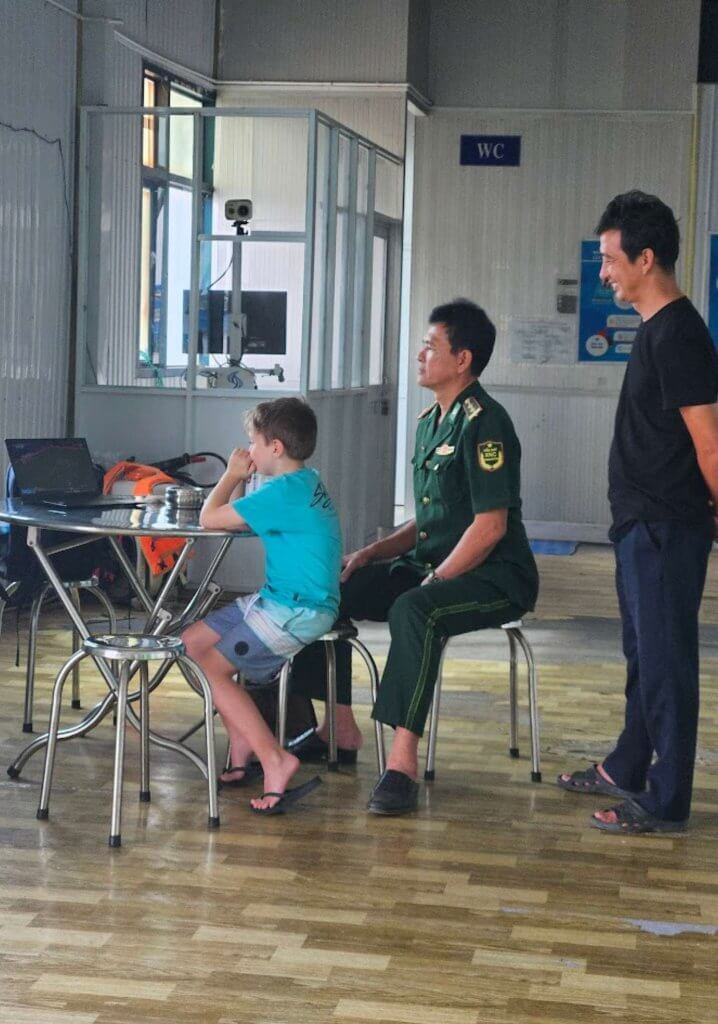
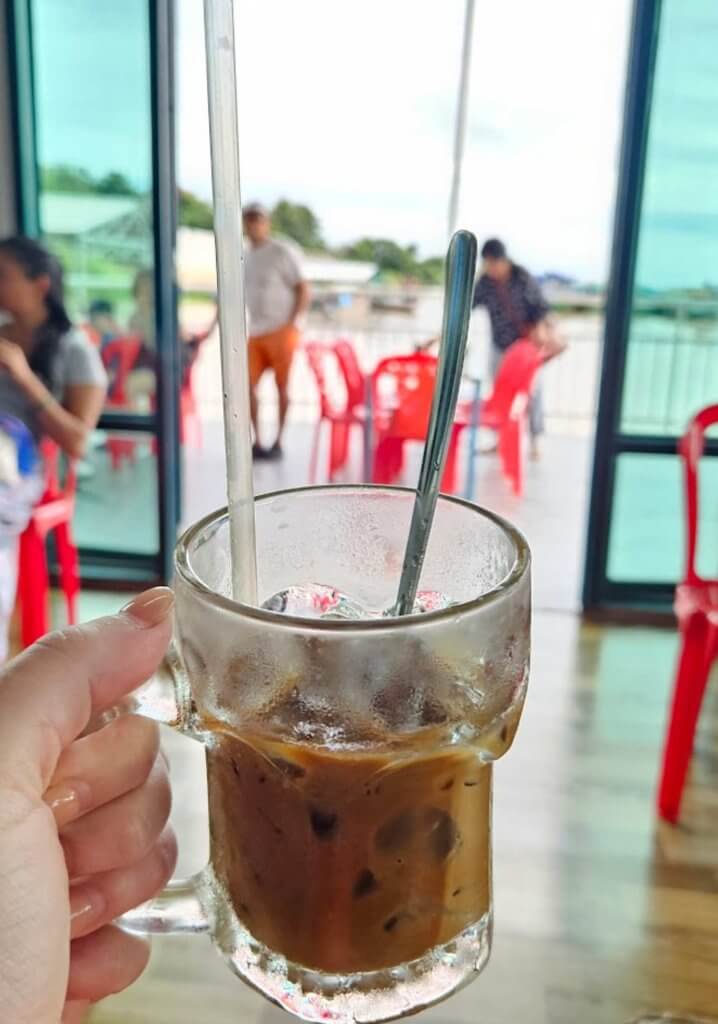
How it works is that you cruise on the boat to the Vietnamese border post, where you disembark the boat and have your exit processed by officials. The border post is a pontoon with a little snack bar and toilets. It was about a half-hour wait, we used the opportunity for one last Vietnamese Iced Coffee. This was also one of our favourite experiences of the whole trip, as the Copa America soccer tournament was on. The border officials, seeing how badly our kids wanted to watch, brought their laptop out of the office to watch the soccer with the kids!!!
After the Vietnamese exit process, you then get back on the boat and cruise for another five minutes or so. You then disembark again to do the Cambodian entry process. This took about 10-15 minutes and is a little office by the river. Use the toilets at the Vietnamese post if you need; the Cambodian ones are unpleasant.
Embarking and disembarking the ferry
The Hang Chau Tourist Ferries run once a day in each direction.
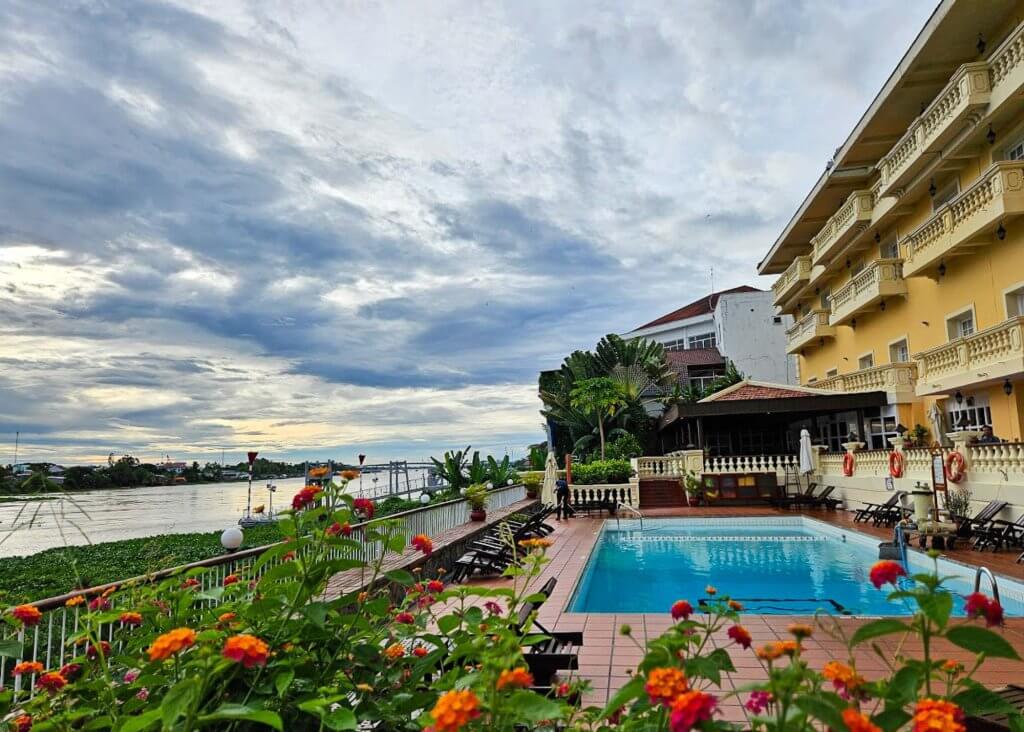
The departure from Chau Doc, Vietnam leaves at 7:00am each day. You need to be at the departure point (the Victoria Hotel, Chau Doc – a beautiful place to stay by the way!) at least a half hour earlier to check in and have staff load your luggage.
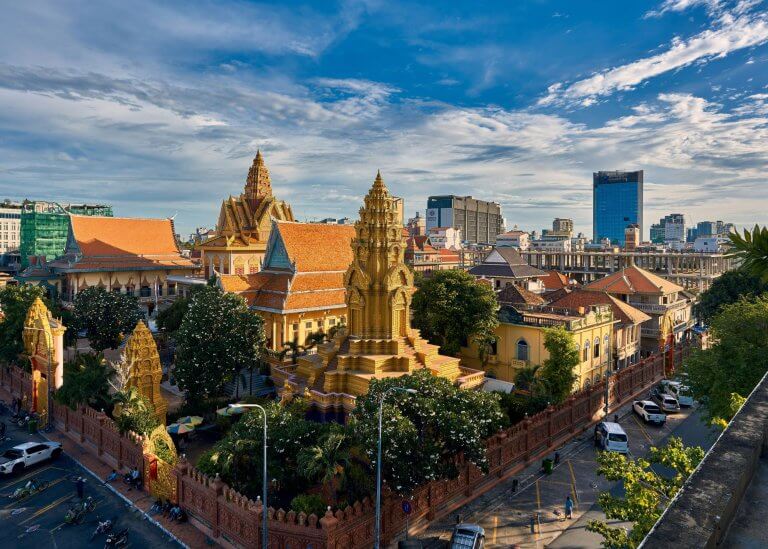
The boat departs Phnom Penh, Cambodia at 12.30pm each day from the Titanic Restaurant. Again, you’ll need to check in at least half an hour early. Come even earlier as this is a nice spot to grab lunch.
Disembarking is a really easy process as the staff are great at communicating with everyone. The embarkation and disembarkation points are the same and these locations are easy spots from which to arrange onward transportation.
Grab is the ride-share service in both Vietnam and Cambodia, so make sure you have the Grab app downloaded. You’ll have no worries getting a Grab from the drop-off point. In Phnom Penh, we stayed at Le Botum Hotel which was fantastic, and it was a 5-10 minute drive from the Titanic Restaurant.
Onboard the Boats
The boat is somewhat basic, but comfortable.
Seats are in an airliner style, with a pocket on the back of the seat in front to store your snacks.
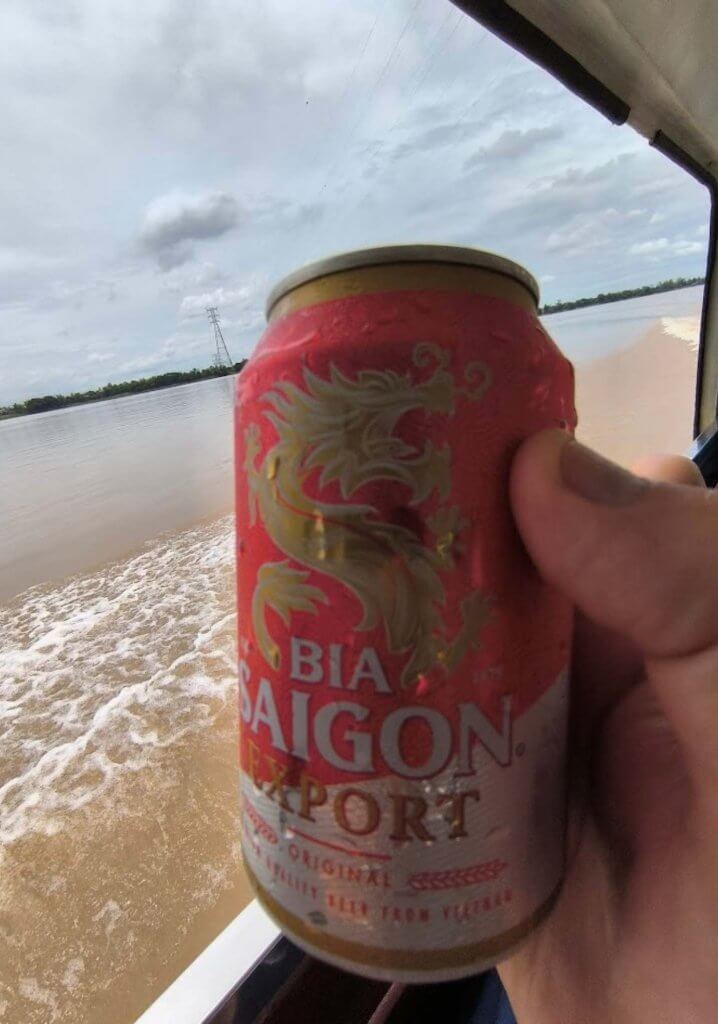
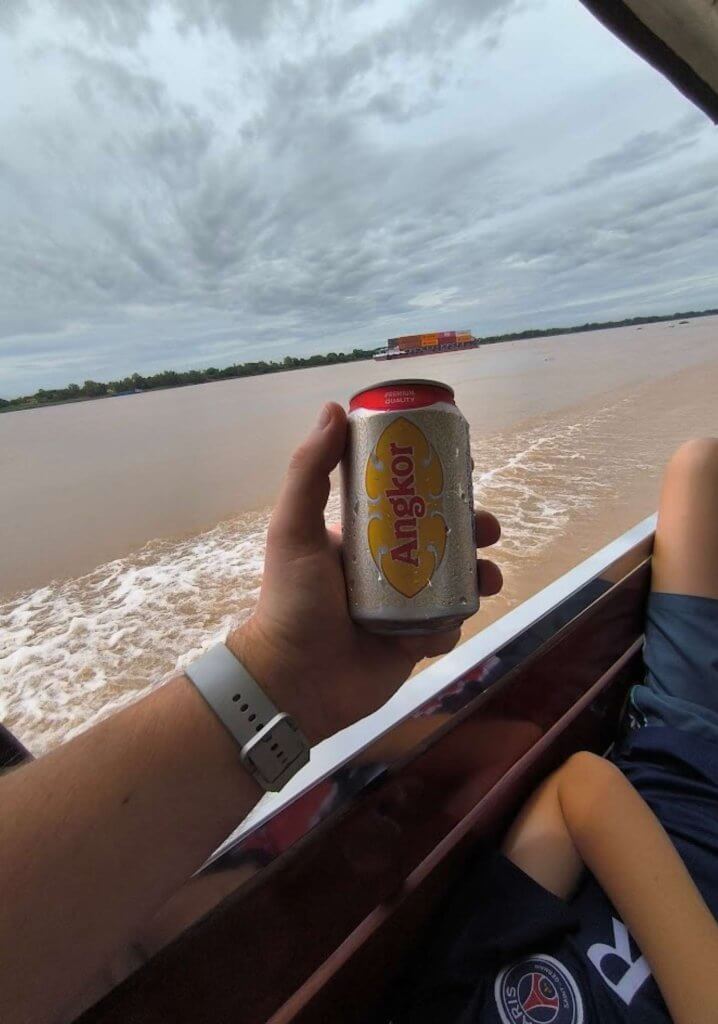
We were given a paper bag with some small snacks in it – a banana, some crackers and some sweet biscuits. Soft drinks and beers are available for purchase on board for just a couple of USD.
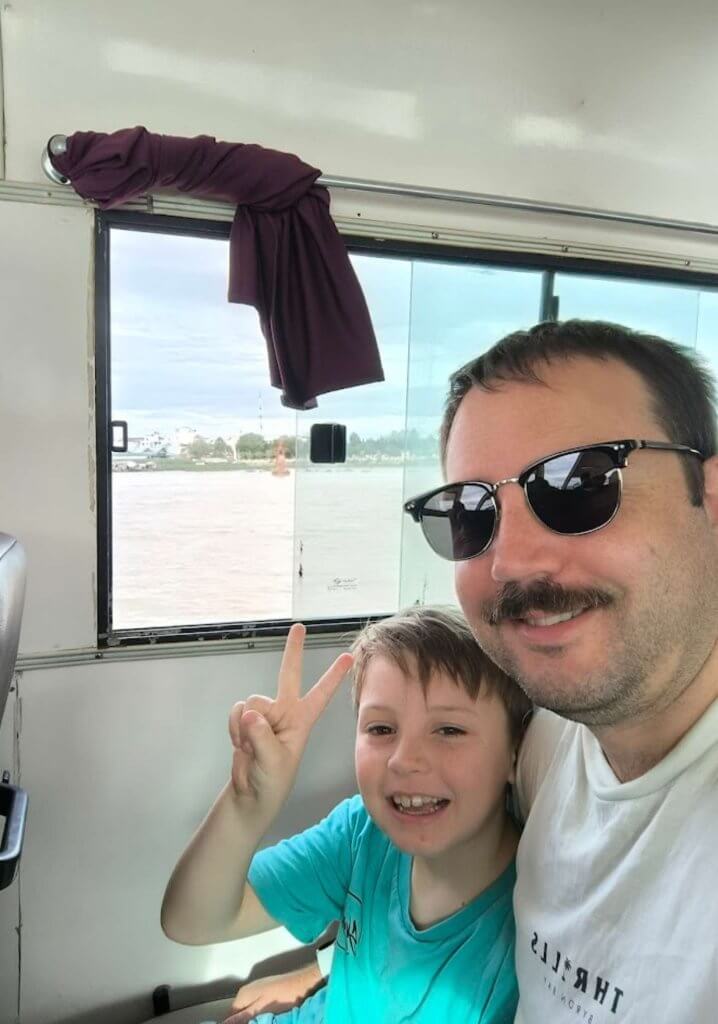
Most seats are inside, with windows and curtains that can be open and closed. There is a seated area at the back of the boat that is outside but with a roof for shade. Luggage is stored here under bench seats.
You’ll find a toilet on board and, while a bit cosy, it was kept clean throughout the journey.
Snacks are available at the Vietnam border crossing, but like on the boat these are mostly foods like chips (crisps) and biscuits. We recommend trying to have a substantial breakfast (or get your hotel to make a take away breakfast pack for you since it’s so early) so you don’t go hungry.
There’s no WiFi on board so download your movies etc. before you leave your hotel. There were a couple of areas with limited/patchy signal for our sim cards, but connectivity was mostly good.
What should I pack in my carry-on?
Other than a few snacks, we recommend some additional supplies to make your journey smoother.
Firstly, be sun-smart! Bring a light shirt or similar to cover your arms, and a decent hat. While you’ll be shaded/inside the boat most of the time, the sun can get fierce in the Mekong Delta. You may be exposed while you’re waiting for your immigration paperwork to clear. A tube of sunscreen is also a good idea.
A phone or device with pre-downloaded content (movies, podcasts etc.) and headphones will keep you entertained. It’s a six-hour journey including immigration processing with little to do (though there’s quite a bit to see out the window).
Don’t forget hand sanitiser! We got sick in the Mekong Delta (like, really sick). While it wouldn’t have been because of our own hand hygiene, eliminating one source of illness is super helpful.
And finally, keep all your required documents (passports, photos for paperwork, cash) within easy reach for the border crossings.
Love this post? Do us a favour and share it!